
Annie Hall
Capsule Film Review #4

This is the fourth in a series of short pieces (max. 250 words) about films. They appear in addition to my regular posts.
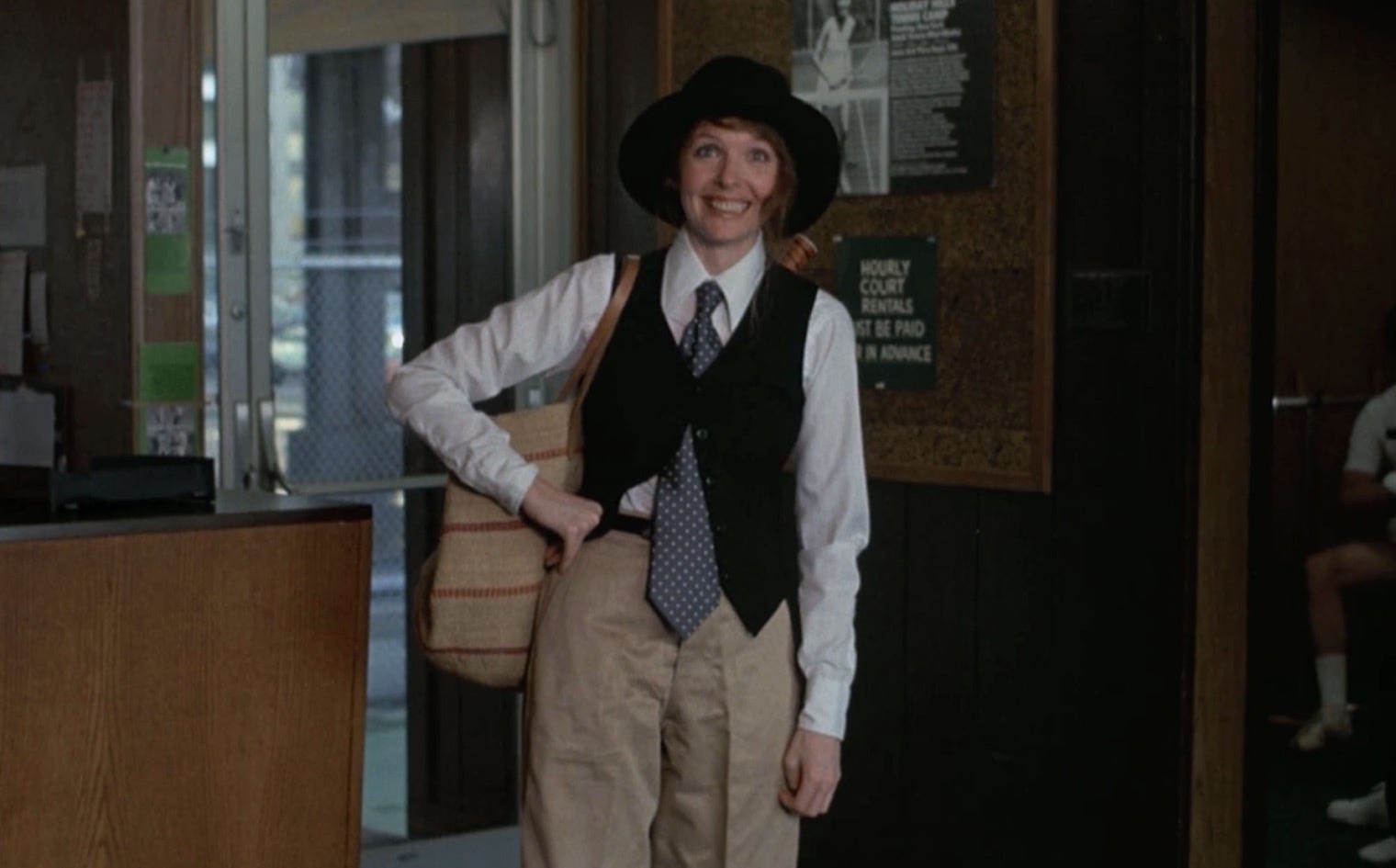
The fragments, reassembled, make a whole: a fragmentary work of art is great when the act of that reassembly seems beautiful, in and of itself. As Michael Newton noted in a retrospective, Annie Hall (1977, d. Woody Allen) ‘tries every possible means to fragment the individual and its story…’
The individual in question is Alvy Singer, and, for us, despite what we have been told, it is also Woody Allen himself. There may come a time when America truly realises the unfathomable talent that it has had in that man—but perhaps not yet.
Thankfully, America has already understood the talent it had in Diane Keaton, who died on Saturday. Look at the title: we might be in Alvy’s head, but the film belongs to Annie; and she, despite Alvy’s dearest wishes, does not belong to him. To see her, as some have done, as a Manic Pixie Dream Girl avant la lettre misses the point: for this dream girl, like Eliza Doolittle, has dreams of her own.
Everyone remembers Michael Corleone: how Pacino changes so completely from floppy-haired youth to cold omnipotence. But Kay changes too, and so does Annie. It is hard to believe that the Annie who says lah-di-dah and feels she’s not smart enough for Alvy is the same woman who rolls her eyes, later on, when he half-heartedly suggests marriage. Diane Keaton, however, makes us believe it. Even at that point, Alvy still hasn’t seen the real woman. But we have.