
Apocalypse Now
Capsule Film Review #9

This is the ninth in a series of short pieces (max. 250 words) about films. They appear in addition to my regular essays.
It could be said, by an author in a more than usually paradoxical mood, that Hitler, in a sense, won the Second World War. He dreamed, after all, of notoriety and vengeance, of world-destruction and self-destruction, and got them; whereas the British, who fought to preserve their Empire, lost it.
The same paradoxical author (warming to his theme) might say that the Americans won the Vietnam War. Not only did Communism not spread much further through south-east Asia, but the land of modern myths found for itself an endlessly reusable and endlessly rich national mythology.
The Vietnamese, as Robert McNamara belatedly discovered, saw the conflict as a civil war—and so, if their cinema is anything to go by, did the Americans. This is clear even from a great film like Apocalypse Now (1979, d. Francis Ford Coppola), which is no more about the Vietnamese point of view than The Lord of the Rings is about the orc point of view.
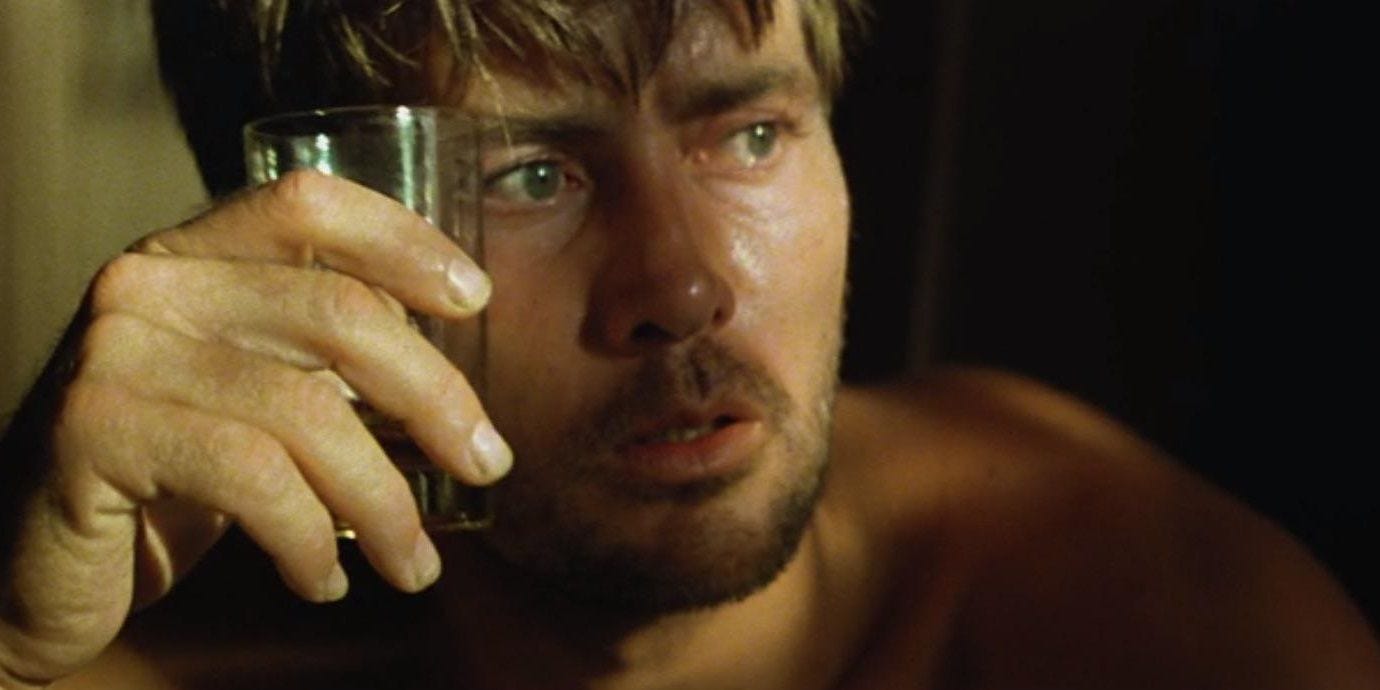
On the whole, it isn’t much about Conrad either, except insofar as the heart of darkness here belongs to Captain Willard. Everything we see and hear—the blood, the napalm, the dregs of Eliot and The Doors—takes place inside him. Somebody must have written a hot take on the film arguing that this is literally true. It may not be, but it may as well be. The first lines say it all for Willard—and for his nation: ‘Saigon. Shit. I’m still only in Saigon.’
Two comments based on two things you said in a very short space.
Firstly, if you've not read Việt Thanh Nguyễn's NOTHING EVER DIES, you should. It explains his fiction but is, I think, better than it (not least on the grounds that the fiction is pretty self-explanatory already). It is required reading for anyone even passingly interested in America's Vietnam-related cultural output.
Secondly, America won the war in two ways. The M16 agent John Colvin, who was in Hanoi during the bombing of it, wrote later that "the American effort in Vietnam, however ultimately unsuccessful on the peninsula, held the line long enough to permit the establishment of a democratic market economy outside of Indo-China itself". What's more, Vietnam immediately went back to war with its great historical antagonist, China, and is now very much part of the market economy itself (as I have written elsewhere, quoting my favourite Godard intertitle, the Vietnamese are, more than anyone, truly "the children of Marx and Coca-Cola").
Of course, America lost the war in the way that really matters actually and therefore psychologically-and we have been living with the results ever since. Vietnam Syndrome was never "kicked".
My father-in-law, two tours of duty in Vietnam with an honorably earned Purple Heart amongst his salad, said of Apocalypse Now “it wasn’t like that.” “It’s not about Vietnam,” I replied. He’d not heard it was based on Conrad’s The Heart of Darkness. Given that knowledge he nodded, somewhat grimly.