
Chimes at Midnight
Capsule Film Review #34

This is the thirty-fourth in a series of short pieces (max. 250 words) about films. They appear weekly, in addition to my regular essays.
No matter what the snobs say, a bad production of a Shakespeare play, however momentarily offensive it might be, can never ‘ruin’ that Shakespeare play. I say that as a dictum: it seems as obviously true as saying that making spaghetti alla carbonara with cream cannot possibly ‘ruin’ Italian cuisine. You can fuck up a dinner, but not a recipe.
I don’t, for instance, much like any film version of Romeo and Juliet that I’ve seen but I do like the play, and that play, it turns out, continues to exist, unaffected, in spite of whatever Baz Luhrmann may have chosen to do with it. The play is a living thing; it seems to bear the same relationship to the play of 1597 as I do, or don’t, to the Alexander Fayne of 2006.
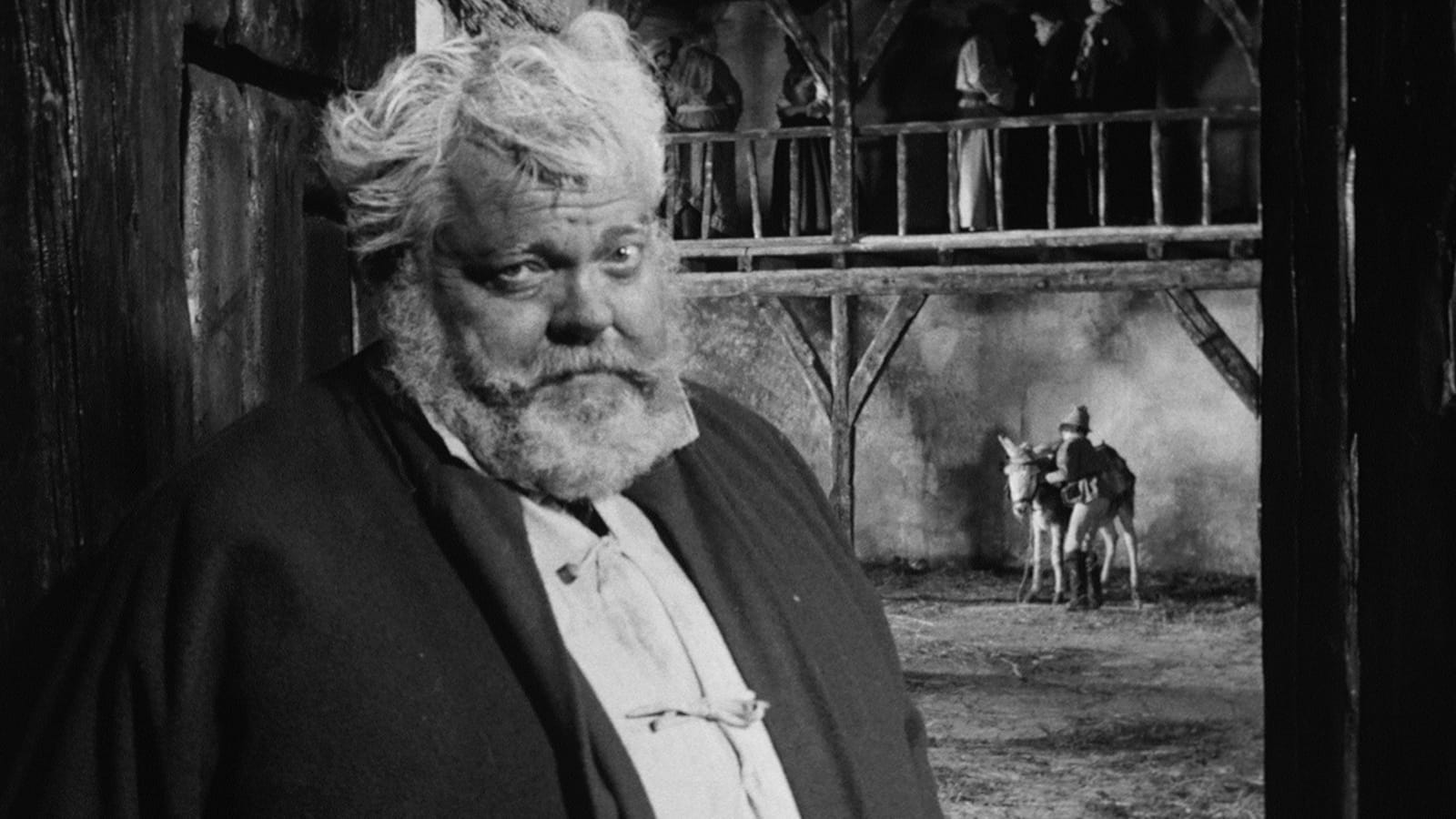
Orson Welles’s Chimes at Midnight (1966) is perhaps the best Shakespearean adaptation ever made—and yet it, too, is ‘unfaithful’. If you can ‘ruin’ Shakespeare by casting Claire Danes as Juliet, then you must ruin Shakespeare by taking five of his plays and mashing them together, as Welles did; taking a secondary character and making a new story around them alone is exactly the sort of thing producers do all the time these days (and that we roll our eyes at); if this film is all Shakespeare, it is also all Welles…
And yet no such objection, it seems to me, can survive an actual viewing of the film. Adaptation is always more complicated than that.
My favourite Shakespeare film - and probably my favourite Welles film too.
funnily enough I just finished watching the henriad + merry wives of windsor on youtube so am feeling very falstaffian.. to welles!