
Night and Fog
Capsule Film Review #33

This is the thirty-third in a series of short pieces (max. 250 words) about films. They appear weekly, in addition to my regular essays.
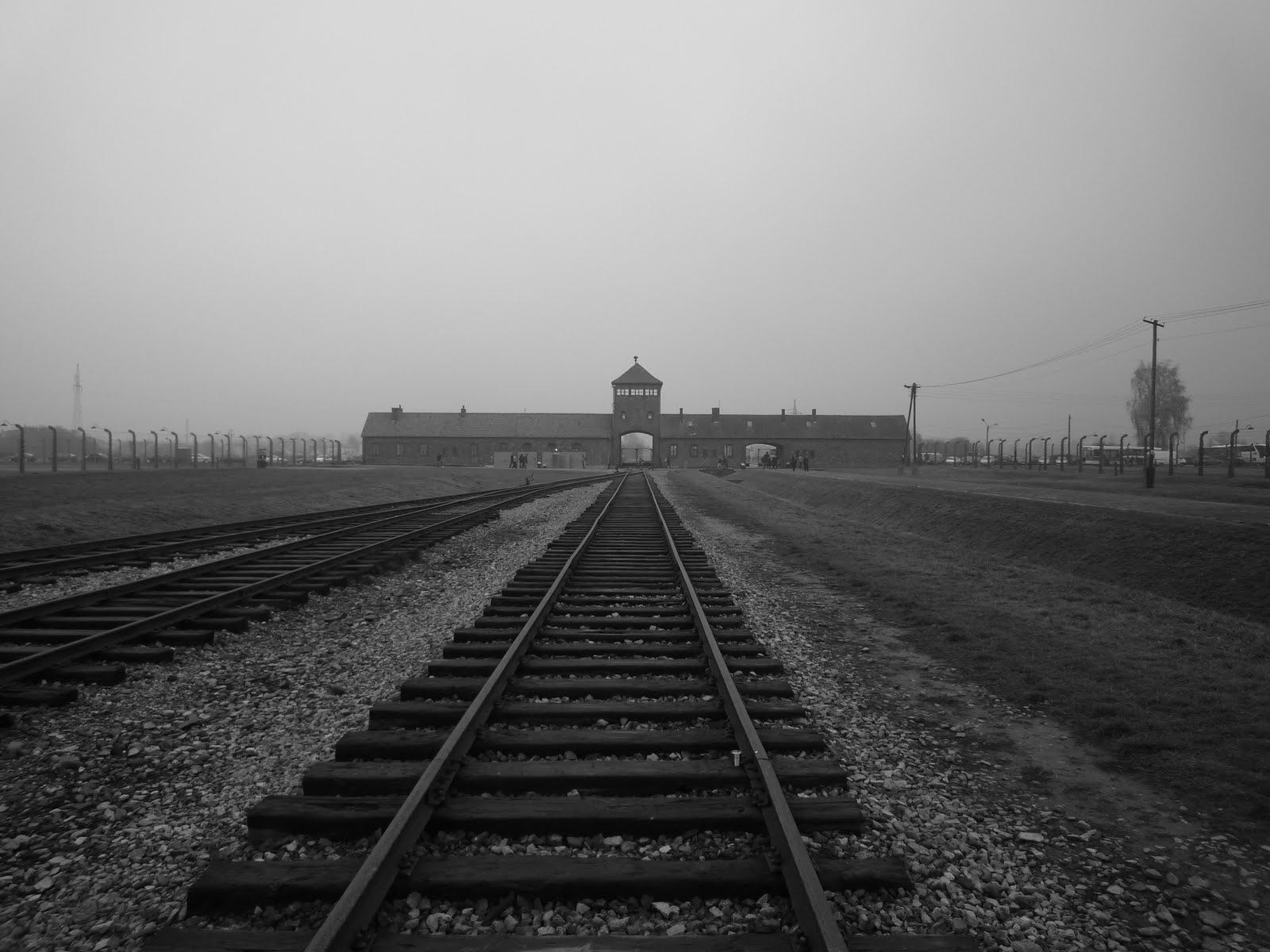
Trains sealed and bolted. A hundred people crammed into a car. No day, no night. Hunger, thirst, suffocation, madness…
A message flutters to the ground. Will it be found?
It is a strange fact that two of the most significant documentary films about the tragedy—perhaps the two most significant documentary films about the tragedy—are, in certain respects, opposites.
Claude Lanzmann’s Shoah (1985) is nine and a half hours long and interviews dozens of victims, bystanders, and perpetrators; Alain Resnais’s Night and Fog (1956) is about half an hour long and interviews no one. Shoah is in and of itself a contribution to history; Night and Fog, composed, as it is, mostly of archival footage, tells us nothing that we do not already know.
And yet by now, in 2026, that first person plural seems wishful. Many people do not know, or refuse to know what they know. ‘The forgetting of the extermination,’ wrote Baudrillard, ‘is part of the extermination.’
I cannot bring myself to watch Lanzmann’s film again; as of today, I have watched Resnais’s film twice. The former could have gone on for much longer: in a sense, perhaps, it should have; that would be true even if it lasted for ninety hours, or six million.
The latter, on the other hand, runs for thirty-two minutes. Even that seems far too long. That is far too long. There is everything to say and there is nothing to say.
one of the facts about this film i cannot forget is that paul celan translated the text into german when it was made to be shown there. (wikipedia)