
The Worldless Rose
Reciter 1. Richard Wilbur's 'Advice to a Prophet'.

This is the first in a series of audio recordings and short essays (max. 500 words, excluding the text of the poems) from my reciter. Other pieces of mine about poetry can be found here.
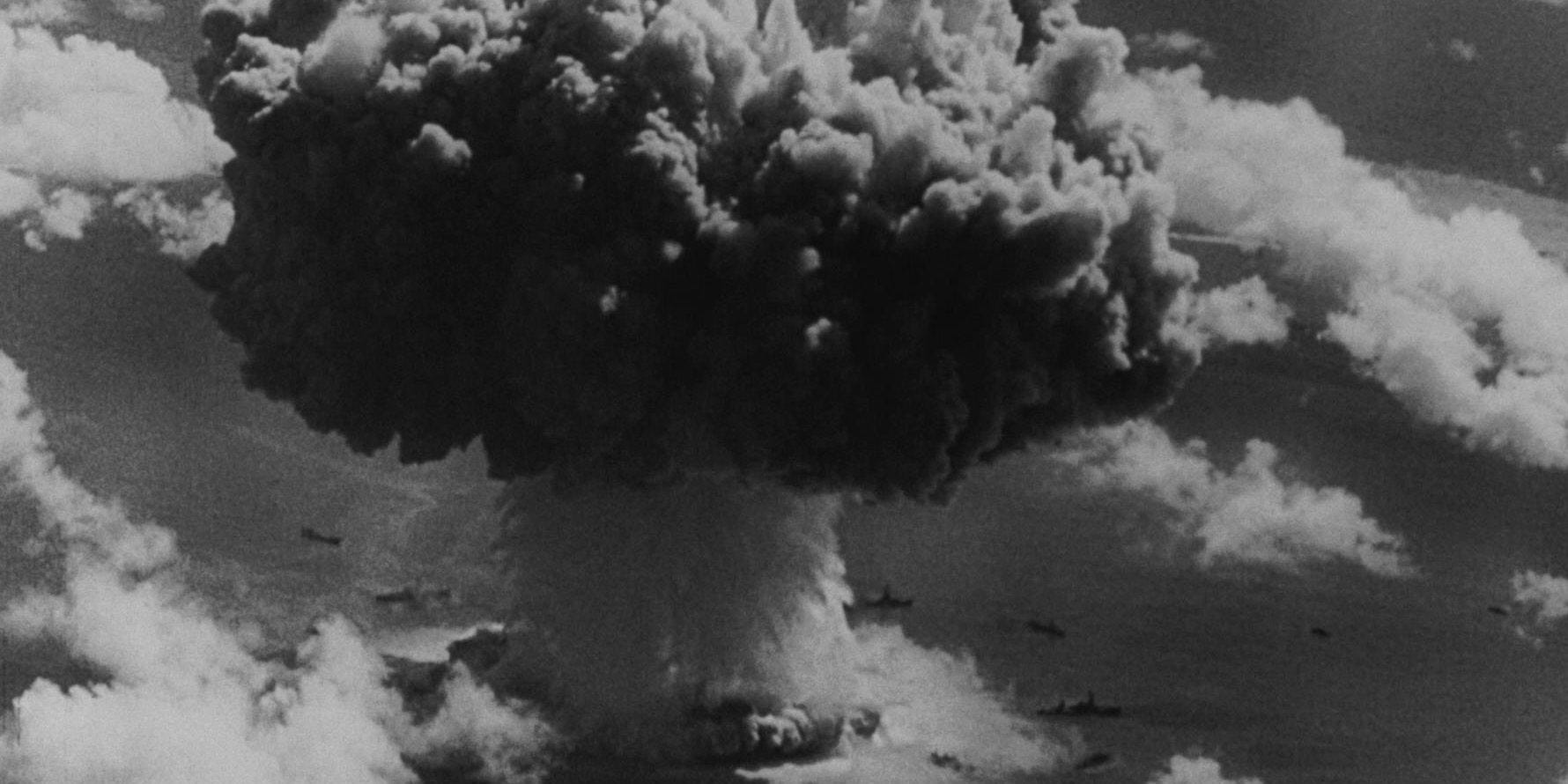
I begin, as too often, with an apology. It hardly seems necessary for me or anyone else to recite Richard Wilbur’s poetry online, since he did that so wonderfully himself. Though not all poets necessarily have the voice to read their own works, he did: his was as grand and elegant as his diction and as his forms. And that was who he was: it seemed he couldn’t do poetry in any other way, even when—as with poems like ‘The Death of a Toad’—he probably should have.
In their way, the thoughts Wilbur thinks are as grand as the way he thinks them. Like Yeats, he seems almost to belong to an earlier age: there is something almost mediaeval in his metaphysical preoccupations, his incantations and orisons, the delight he takes in quiddities, paradoxes, riddles…
The riddles in question are the riddles of existence, and they are manifold: they arise from his observation of ‘the things of this world’, and above all from his observation of nature. Indeed, I can’t think of another modern poet in English, apart from Les Murray, more attuned to nature: where Murray’s nature is the Australian Outback, Wilbur’s is, as it were, Frost Country, the woods and brooks of New England, the setting of so many of his masterpieces.
Temperamentally positive—he was that rarest of all literary species, an intelligent optimist—Wilbur shares with Murray (necessarily, I should have thought, for an optimist) a theistic sensibility that, paradoxically perhaps, seems especially noticeable in those poems which are not explicitly religious. He is at his most astonishing when nature and that sensibility combine—as in his miraculous poem ‘Lying’, whose very existence is one of the better arguments for the good God—just as he is at his most affecting in those poems when those two things in turn combine (which they must do, sometimes, even for an optimist) with horror.
‘Advice to a Prophet’ is a poem like that: from one angle, it is utterly horrifying. Though it too is filled with quiddities and paradoxes, it is, in the end, fairly simple. ‘Speak of the world’s own change,’ the poet advises the prophet: without the things of this world—‘the dolphin’s arc, the dove’s return’—who or what would you be? If there comes a day when the weapons fall once again to the earth—‘its gliding trout / Stunned in a twinkling’—what kind of life will be left for you, even if you survive?
The poem’s shimmering beauty forces us to confront the loss of that beauty, which is one of the reasons that readers in 1961 were left in such horror: Wilbur described people crying as he read it aloud. The other reason, sadly, is peculiar to us: for the danger he described then is still a danger now. In 1961, it was still possible, perhaps, to believe that we would one day be safe. But nobody, nowhere, can believe that now, in 2026.
Advice to a Prophet
When you come, as you soon must, to the streets of our city,
Mad-eyed from stating the obvious,
Not proclaiming our fall but begging us
In God’s name to have self-pity,

Spare us all word of the weapons, their force and range,
The long numbers that rocket the mind;
Our slow, unreckoning hearts will be left behind,
Unable to fear what is too strange.

Nor shall you scare us with talk of the death of the race.
How should we dream of this place without us?—
The sun mere fire, the leaves untroubled about us,
A stone look on the stone’s face?

Speak of the world’s own change. Though we cannot conceive
Of an undreamt thing, we know to our cost
How the dreamt cloud crumbles, the vines are blackened by frost,
How the view alters. We could believe,

If you told us so, that the white-tailed deer will slip
Into perfect shade, grown perfectly shy,
The lark avoid the reaches of our eye,
The jack-pine lose its knuckled grip

On the cold ledge, and every torrent burn
As Xanthus once, its gliding trout
Stunned in a twinkling. What should we be without
The dolphin’s arc, the dove’s return,

These things in which we have seen ourselves and spoken?
Ask us, prophet, how we shall call
Our natures forth when that live tongue is all
Dispelled, that glass obscured or broken

In which we have said the rose of our love and the clean
Horse of our courage, in which beheld
The singing locust of the soul unshelled,
And all we mean or wish to mean.

Ask us, ask us whether with the worldless rose
Our hearts shall fail us; come demanding
Whether there shall be lofty or long standing
When the bronze annals of the oak-tree close.
Of course the poem is excellent, but so are your voice and recitation!
Damn, you can read a poem. (Please, lord, in my next life let me sound like an Englishman.)