
There's No Escape
Reciter 3: Noël Coward's 'I Am No Good at Love'

This is the third in a series of audio recordings and short essays (max. 500 words, excluding the text of the poems) from my reciter. They appear fortnightly.
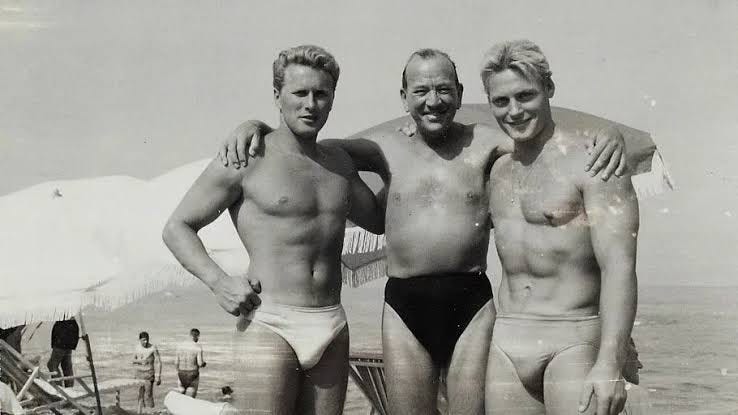
In certain moods, the poems I misremember seem as charged with meaning—now consoling, now sinister—as the poems I remember. Perhaps the most beautiful of the many beautiful films directed by Werner Herzog is The Great Ecstasy of the Woodcarver Steiner, which ends with a poem supposedly written by the Swiss writer Robert Walser (but which, as I understand it, was in fact written by Herzog.)
Like the film, it is a text of fantastic isolation, of ecstatic truth:
I should be all alone in this world
Me, Steiner, and no other living being.
No sun, no culture; I, naked on a high rock
No storm, no snow, no banks, no money
No time and no breath.
Then, finally, I would not be alone in this world.
Except that it doesn’t say that: that was my recitation. What the last line actually says is:
Then, finally, I would not be afraid any more.
In my misremembered version, if Steiner were alone, and truly alone, he wouldn’t be alone. I could build whole philosophies out of that mistake.
In the same way, I could build a whole autobiography out of my misremembering the following text by Noël Coward. The title is ‘I Am No Good at Love’, though I remembered it, and even quoted it once, as ‘I Am No Good at Life.’ That would be apt for me (actually both would be apt for me), and it works oddly well, I think, even in my mistaken version...
Strictly speaking, the text is a variation on one of Coward’s songs, though I first encountered it on the page in James Fenton’s wonderful Faber Book of Love Poems. The precise distinction between song lyrics and poetry is complicated to say the least: just as complicated as the distinction between poetry and verse, though it’s tempting, given the ease of the rhythms, to characteristic this text as the latter.
As in much of the writing of John Betjeman, it chimes in an archaic way; even if read without musical accompaniment, it still sounds a bit like a Broadway show tune. And yet—again, as in Betjeman—there is a world of psychic suffering hidden underneath the entertainment. Betjeman once wrote a poem about his teddy bear which concludes with the fear of Eternity. Coward here has written a popular love song which, on the face of it, is unbearably sad.
That the speaker is riven by terrors and sleeplessness is bad enough: that those things come not at the end of the good times but at their beginning is worse. He looks at love in the way that some of us look at the good things in life, as a way to escape himself—though he knows full well he can’t.
People who try only to escape themselves, like him—like me—are generally bad at love and bad at life. That is one reason they try so hard to be good at other things—as Coward was, indisputably and gloriously.
I Am No Good at Love
I am no good at love
My heart should be wise and free
I kill the unfortunate golden goose
Whoever it may be
With over-articulate tenderness
And too much intensity

I am no good at love
I batter it out of shape
Suspicion tears at my sleepless mind
And, gibbering like an ape
I lie alone in the endless dark
Knowing there's no escape

I am no good at love
When my easy heart I yield
Wild words come tumbling from my mouth
Which should have stayed concealed;
And my jealousy turns a bed of bliss
Into a battlefield

I am no good at love
I betray it with little sins
For I feel the misery of the end
In the moment that it begins
And the bitterness of the last good-bye
Is the bitterness that wins
I've not yet encountered a new-to-me poem via you (+/- your resounding voice) I've not been shaken and ensorcelled by. Many thanks.
Hadn't heard of Coward until today but I did find the piece really moving and sincere (also loved the ecstatic truth)